

Launching VSaaS as a Telecom Service: How to Choose Proper Monetizing Model
Choosing a strategy for launching VSaaS as a telecom service, like any other cloud VAS strategy, requires careful planning to ensure a smooth rollout, scalability, and long-term profitability. While there is no one-size-fits-all approach, several general frameworks can help telecom operators successfully enter and grow in this space. Today, we want to share the models that have helped our clients around the world achieve their goals with minimal risk.
So, let’s get one thing straight: the main benefit of VSaaS (Videovigilância como Serviço) isn’t about selling cameras or other hardware. The real money is made through subscription-based sales. This means ongoing payments from customers, reflected in the average amount each user pays for subscribed services. This is what drives the profitability of VSaaS, and it’s essential to understand this to see the value of the service. By focusing on subscription-based services, VSaaS providers can create a steady stream of revenue, which is key to their success.
By structuring tiered subscription plans, telecom providers can cater to different customer segments: from usuários residenciais para small businesses and large enterprises, while continuously upselling additional features over time.
Stage 1. Connecting existing cameras of B2B clients
By linking existing cameras to a cloud-based platform, telecom companies can quickly offer more to their customers via new service and start earning from them right away. This way, they can generate payments from the first weeks and don’t have to wait as long to see initial revenue. It’s a win-win: customers get more out of their cameras thanks to cloud provisioning and innovative features, and telecoms gain a steady revenue stream.
Examples of Monetization Models
At this stage, pricing strategy plays a critical role in adoption and long-term profitability.
1) Subscription per Camera.
The pricing for cloud services is often based on a simple subscription model where customers pay a fixed monthly fee for each camera they have connected. This fee usually includes features such as live or archived video streams, access from anywhere via a mobile app, and technical support whenever needed. This pricing model is easy to understand and plan for. It works well in the era of SaaS development. It is also easy for telecoms to predict how much they will earn as more customers start using their services. It’s a straightforward approach that helps businesses grow and plan for the future.

2) Connection License (One-Off) + Monthly Fee.
In this hybrid model, customers pay an initial one-time fee to onboard each camera into the platform, followed by a recurring monthly subscription. The upfront license helps offset integration and provisioning costs, while the ongoing fee ensures continuous revenue.
When telecom operators bring existing cameras online to cloud surveillance platforms, they can quickly gain visibility into their customers’ environments, collect data on how they are being used, and create additional value through advanced features later on.
Basically, the first stage makes it easy for customers to adopt new services quickly.
VSaaS platforms like Aipix take traditional NVR surveillance systems and turn them into cloud-based solutions. This approach helps telecom operators build a strong and risk-free financial oundation for their new VSaaS offering in the future. This strategy makes their business more efficient and profitable, which is good for both the telecom company and its customers.
Stage 2: Onboarding New B2B Clients, Leveraging Intercom, and Expanding into B2C
After establishing a foundation by connecting existing camera infrastructure, telecoms gain a solid base for launching VSaaS as a telecom service. In the next stage, they can expand VSaaS by bringing in new B2B and B2C customers through the integration of smart intercom services. This is where Aipix VSaaS begins to show its unique advantages and value. Aipix is an ideal VSaaS software solution for integrating different services across various segments. It allows telecoms to monetize their infrastructure and reach a large number of customers.
1) New B2B Camera Deployments
This phase is different from the first one, where existing NVR systems were simply integrated. Now it gives telecom operators the opportunity to sell hardware as well.
Model 1: Bundled Services (Connectivity + VSaaS).
An approach is bundling video surveillance with core telecom services such as broadband or fiber connectivity. In this model, customers receive a discounted price when purchasing a combined package (e.g., internet + video surveillance) compared to buying each service separately.
Bundles are particularly attractive for SMEs, retail chains, and offices that prefer a single vendor for connectivity and security.
Model 2: Camera-as-a-Service (CaaS).
Customers pay a fixed monthly fee per camera (e.g., €X/camera/month), which includes hardware (camera devices), installation and setup, maintenance, and support.
This removes the need for large upfront costs, making it much easier for customers to onboard video surveillance as a service. Upsell opportunities include:
- Extended video archive (longer retention periods).
- Multi-site or centralized management dashboards.
- VideoAnalytics features (face recognition, license plate number recognition, fire and smoke detection, zone intrusion detection etc.).
This telecom operator approach to VSaaS is highly effective. It aligns with a subscription-based model, allowing end users to try the service without committing to a large upfront cost. Moreover, telecom operators can rely on a steady revenue stream.
2) Intercom as a Growth Driver
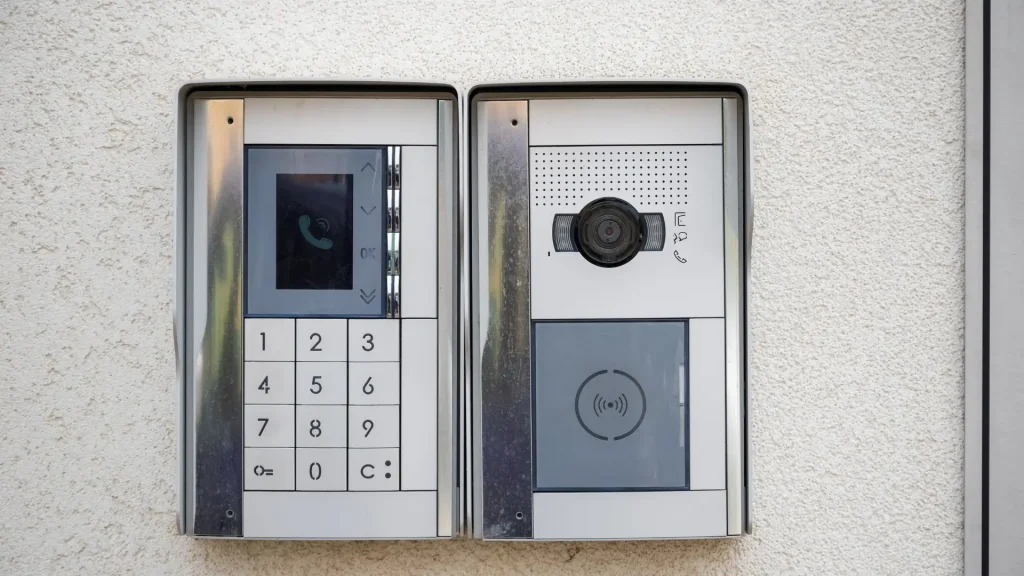
Smart intercom systems are a natural extension of cloud video surveillance as a service. But in fact, today it often acts as a gateway product, especially in residential and multi-tenant buildings.
Pricing Models:
- Per flat: €X per apartment per month
- Per building (backend fee): €X per building for system management
Intercom systems are highly scalable and benefit from network effects: once installed in a building, they can serve dozens or hundreds of users simultaneously. Generally, providers don’t even have to change equipment in client’s flats as the management goes through Mobile App.
Upsell Opportunities:
- Archive callings from visitors you missed
- Keyless access via BLE
- Smart access control features
- Remote access to intercom camera feeds
Intercom solutions also create a natural bridge between B2B (property managers, developers) and B2C (residents), making them strategically important for expansion.
3) Entering the B2C Market via “Public Cameras”
One of the biggest advantages of Video Surveillance as a Service is that it allows telecoms to generate revenue from a single video stream in multiple ways and for different types of users. For example, public cameras, such as those in courtyards, entrances, and parking areas, enable telecom companies and ISPs to offer video surveillance services to municipal authorities, police, parking staff, and other related parties, as well as to residents who want to monitor their residential environment. All of this is achieved without incurring additional infrastructure costs.
Model A: Freemium (Key Model)
- Free Tier: Live viewing of shared spaces (e.g., courtyard, parking lot)
- Paid Tier (€X/month): access to video archive, ability to share access with additional members or enhanced features (alerts, downloads)
This system helps start using it rapidly by getting rid of obstacles, and at the same time, it makes money from its special features.
Model B: Bundle with Internet
- Base internet plan: €X (aligned with the most consumed plan)
- Add-on for camera access: typically 10–20% of the base price
This approach feels like a natural extension of home connectivity and increases ARPU with minimal incremental cost.
Model C: Bundle with Intercom
- Combined offering: Intercom + access to public cameras
This works especially well in apartment areas where intercom systems are already integrated and operational. Smart intercom as a telecom service completes the entire building infrastructure, creating a “smart building.” Here, everything is connected, controlled, and easy to use and manage.
The core strength of this stage lies in its dual-revenue structure:
- For B2B finances the infrastructure Businesses, property developers, and building managers pay for camera installation, connectivity, and system deployment.
- For B2C monetizes the same video streams Residents and end users subscribe to access those same cameras — creating multiple revenue streams from a single asset.
Stage 2 transforms VSaaS from a niche B2B service into a platform business. By combining infrastructure ownership, bundled telecom services, and multi-sided monetization (B2B + B2C), operators can significantly expand both revenue and market reach.
At this point, VSaaS becomes more than just a way to monitor activity, it evolves into a key part of a broader system that makes life and business smarter.
Stage 3. Video Analytics for B2B and Private Home Surveillance (B2C)
Many telecom companies now focus their attention on high-margin services like video analytics. It is also widely used among individual consumers through home security systems. This is a key step in increasing ARPU, differentiating in the market, and building strong customer loyalty over time. By doing this, companies can create more value for their customers and stay ahead in the market.
3.1 Video Analytics: From Monitoring to Intelligence
Video analytics is like a smart addition to VSaaS. Instead of just streaming and storing video, which has limited operational impact, analytics turns it into an insightful tool that can actually be used. This makes each connected camera much more valuable.
Pricing Model: Per Camera with Analytics Add-On
The traditional approach is for companies to charge for VSaaS through a monthly fee per camera. Now, they can offer additional features, such as analytics, for an extra cost on top of the standard subscription. The final invoice depends on how many cameras are connected to the AI analytics module and the level of the Aipix analytics used (detection, recognition, or counting).
Using video analytics can significantly boost telecom operators’ ARPU and revenue. Beyond financial gains, analytics also has strong potential for improving customer loyalty, as modern businesses value the insights and automation it provides. With deeper integration into operations, video analytics can help predict and prevent security threats, analyze customer behavior, improve service standards, and provide a clearer understanding of how operations are running.
3.2 Home Video Surveillance (B2C)
With infrastructure and shared-camera monetization already in place, Stage 3 introduces private in-home surveillance solutions, bringing VSaaS directly into individual households. This segment offers strong growth potential, particularly when combined with telecom bundling strategies.
Model 1: Starter Kit (Entry-Level Adoption)
- Cameras provided on a rental basis
- Monthly subscription for archive and basic features
This model lowers the entry barrier for consumers by minimizing upfront costs while still introducing them to the ecosystem.
Upsell opportunities:
- Extended video archive
- Advanced analytics (e.g., smart alerts, person detection)
- Additional cameras
Model 2: Fully Subscription-Based (All-in-One Service)
A premium, all-inclusive offering where customers pay a single monthly fee that covers:
- Camera devices
- Professional installation
- Armazenamento em nuvem
- Maintenance and support
This approach gives users a sense of security and simplicity. It is very appealing to individuals who are tired of complicated systems and are willing to pay for a complete, hassle-free solution from a telecom provider. For telecoms and ISPs it’s a rare opportunity to raise ARPU on each customer and build strong, long-lasting relationships with them.
Model 3: Bundle with Internet
Private home surveillance can be effectively bundled with broadband or fiber plans:
- Base internet subscription: €X + add-on for home surveillance: incremental monthly fee
This model is particularly powerful when combined with existing telecom distribution channels and customer base.
At this point, in Stage 3, things start to change. Telecoms that provide VSaaS become part of an ecosystem that makes homes and businesses smart and secure. This means telecommunication companies offer more than just basic services. They provide valuable information, make life easier, and give business owners and individuals peace of mind, all of which can be offered as services.
Exact Factors that Drives VSaaS Pricing for Each Stage
Regardless of the chosen model, several factors directly influence pricing and ARPU:
- Number of Cameras. The total volume of connected devices remains the primary scaling factor. Volume-based discounts may be applied for larger deployments to encourage expansion.
- Archiving Depth (Retention Period). The number of days video footage is stored in the cloud significantly impacts storage costs and pricing tiers. For example, 7-day, 30-day, or 90-day retention plans can be offered as differentiated packages.
- Video Quality (Resolution & Bitrate) Higher resolution streams (e.g., HD, Full HD, 4K) require more bandwidth and storage, which translates into higher pricing tiers. Customers can be given flexibility to balance quality and cost.
- SLA and Support Levels Service Level Agreements (SLA), uptime guarantees, and customer support responsiveness are key differentiators, especially in the B2B segment. Premium support packages, faster response times, and dedicated account management can justify higher subscription fees.
Final Thoughts about Launching VSaaS as a Telecom Service
Each telecom provider entering a new VSaaS offering has its own approach to execution. There are many strategies that can help minimize risks when entering a new market: from lower-risk options, such as operating only existing systems, to full expansion across both B2B and B2C segments, offering services from basic VSaaS to advanced AI analytics. Each of these steps demonstrates a clear path toward increasing ARPU, strengthening customer retention, and unlocking new revenue streams.
Telecoms and ISPs already have a strong infrastructure foundation to build on. However, successful execution is not guaranteed by strategy alone. These stages are more effectively achieved with the support of trusted software providers such as Aipix. With a solid software backbone and the flexibility to scale, integrate, and monetize efficiently, operators can move beyond fragmented deployments toward a unified, future-proof VSaaS platform.
With more than 10 years of experience collaborating with nationwide providers around the world, we at Aipix have gained a wide range of use cases and deep expertise in launching VSaaS as a telecom service. By choosing our software solutions, you receive strong support in implementing your strategy at every stage.
Contact us to learn more. Our team is ready to assist – just fill the form below for a brief introduction.
Obtenha seu "Relatório VAS e VSaaS 2025"
Deixe seu e-mail e enviaremos o arquivo para você.





 PT
PT  EN
EN  ES
ES  FR
FR  PL
PL