

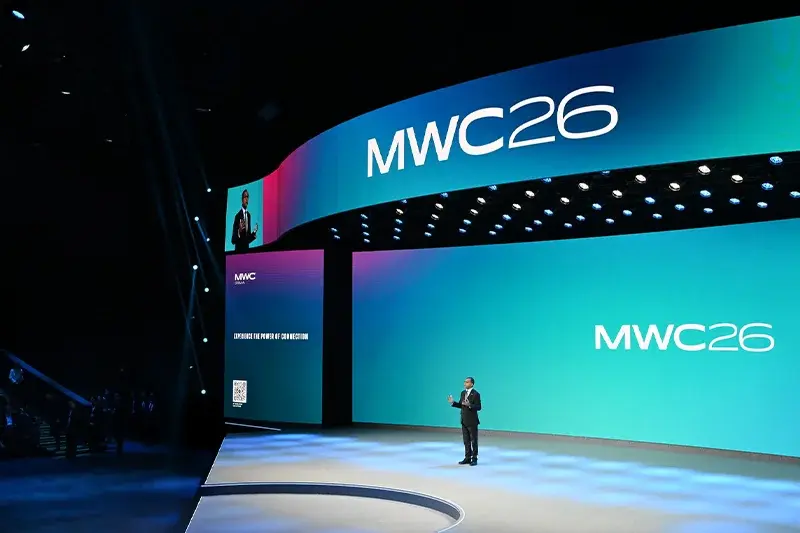
What MWC Barcelona Reveals About the Future of Telecom and AI-Driven Value-Added Services
Jefferson Chandler Wright, Business Development Manager at Aipix in the region of USA, UK, EU and Canada visited MWC Barcelona 2026, representing Aipix VAS solution in this event.
Mobile World Congress Barcelona once again demonstrated that the telecommunications industry is entering a new phase of technological transformation. The dominant narrative throughout the event was the emergence of what many participants described as the “IQ Era” of telecom infrastructure”, a shift in which networks are no longer just connectivity platforms but increasingly intelligent systems capable of managing themselves.

Artificial intelligence was present everywhere at MWC Barcelona 2026. Vendors showcased AI-powered network optimization, predictive maintenance, automated customer service, and advanced cybersecurity analytics. The overall message from the industry was clear: the future network will be AI-native, with intelligence embedded directly into infrastructure rather than simply layered on top of it.
Yet behind the ambitious visions and impressive demonstrations lies a deeper structural challenge that the industry has yet to fully resolve.
Let’s dive deeper in the main insights from the event, highlighted by Jefferson Chandler Wright.

MWC Barcelona 2026. Core Themes and Trends
AI-Native Networks and the Road to 6G
One of the most prominent themes across the conference MWC Barcelona 2026 was the industry’s gradual transition from 5G toward 6G architectures. While commercial 6G deployments are still years away, vendors and operators are already laying the technological groundwork.
Companies such as Nvidia highlighted the concept of AI-native 6G networks, in which machine learning systems are embedded directly into network control mechanisms. These systems are expected to dynamically optimize spectrum usage, allocate network resources in real time, and adapt performance based on changing demand.
Operators are also experimenting with entirely new approaches to network intelligence. Telefónica, for example, introduced its “Quantum Telco” initiative, exploring how advanced optimization technologies such as Digital Annealers could address highly complex operational and logistical challenges within telecom environments.
Alongside these infrastructure developments, enterprise-focused discussions concentrated on AI-driven decision-making, cybersecurity automation, and the monetization of AI-powered services. For operators seeking to move beyond commoditized connectivity, these capabilities represent critical opportunities to develop new revenue streams.
However, one observation became increasingly clear throughout MWC: despite the intense focus on AI, the industry’s implementation remains fragmented.
The Fragmentation Challenge
As Gil Rosen, Chief Marketing Officer at Amdocs, during MWC Barcelona 2026 pointed out in a widely discussed commentary, most AI initiatives within telecom are still confined to isolated operational silos.
This observation strongly reflects what could be seen across the exhibition halls. The industry is full of pilots, prototypes, and compelling demonstrations. Yet when looking at the actual operating models of communication service providers, the transformation appears far less advanced.
AI is widely used to support operational tasks. It helps customer service agents respond faster, assists network engineers in diagnosing issues, and enables predictive analytics across infrastructure systems. But what it rarely does is manage processes end-to-end.
Humans still play the central role in connecting insights, coordinating teams, and executing decisions across multiple systems. As a result, the impact of AI often remains incremental rather than transformative.



An additional challenge has emerged as telecom environments become increasingly complex: the proliferation of devices, platforms, and vendors.
Rather than focusing on unified AI-driven operations across the entire service stack, many organizations are searching for ways to use AI primarily to manage the growing number of connected devices and integrate services from multiple vendors into a single interface. The goal is to simplify operational complexity by providing centralized dashboards and control layers that bring together disparate systems.
While this approach certainly improves visibility and operational efficiency, it does not fundamentally address the deeper structural issue. A single interface that aggregates multiple vendor solutions may simplify management, but it does not necessarily enable true end-to-end intelligent execution across the entire telecom ecosystem.
Telecom as the Ultimate AI Test Environment
Telecommunications is one of the most demanding environments for enterprise AI.
Operational processes span multiple domains, including network infrastructure, IT systems, and business operations. These layers are deeply interconnected, and disruptions in one domain can quickly affect the entire ecosystem. At the same time, telecom networks operate at enormous scale, serve millions of users, and must comply with strict regulatory frameworks while maintaining near-perfect reliability.
This reality makes the industry naturally cautious. Unlike many digital businesses, telecom providers cannot afford experimental deployments that risk service disruptions.
Yet this very complexity also positions telecom as one of the most important testing grounds for enterprise AI. If autonomous AI systems can successfully operate within telecom’s highly regulated and mission-critical environment, they can likely function in almost any industry.
From Digital Transformation to Cognitive Operations
Over the past decade, telecom operators have invested heavily in digital transformation. Legacy systems were modernized, workflows automated, and infrastructure migrated to cloud-based environments. These steps were essential for improving operational efficiency.
However, these changes largely remained rooted in human-centered operational models.
What is emerging now is a more profound shift: the move from digital operations toward cognitive operations, where intelligence becomes embedded directly into the execution of business processes.
In such an environment, autonomous AI agents are no longer limited to analyzing data or providing recommendations. Instead, they collaborate across systems, make decisions within defined governance frameworks, and execute operational workflows.
This concept, which is often referred to as agentic AI, represents a significant evolution in how artificial intelligence is applied within enterprise environments. Rather than functioning as assistants or copilots, AI systems become active participants in operational processes.
Workflows evolve from rigid, task-based structures into outcome-driven systems, in which autonomous agents coordinate activities across network, IT, and business layers. These systems continuously learn from operational data and adapt processes in real time.


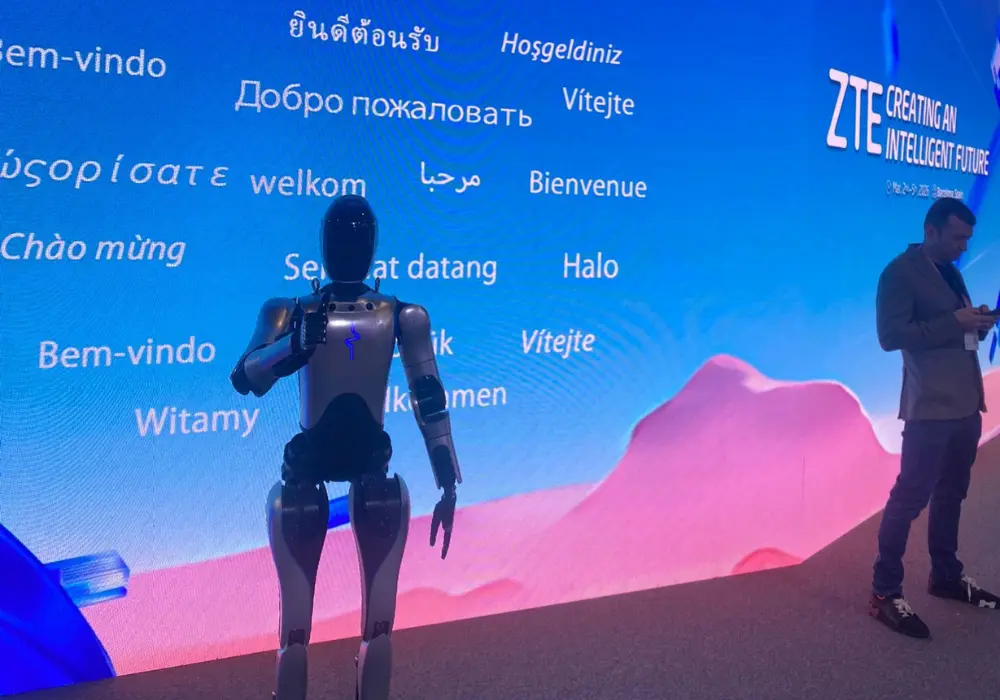
The Architectural Challenge
Achieving this vision requires more than deploying additional AI models. It demands a fundamental rethinking of telecom architecture.
Autonomous AI systems must be able to coordinate across domains, which requires robust orchestration frameworks. They must also incorporate deep telecom-specific knowledge, as generic AI solutions often struggle with the complexity of telecom operations.
Equally important is the need for trust by design. In highly regulated industries, transparency, accountability, and explainability cannot be optional features—they must be embedded directly into AI-driven systems.
Finally, any realistic solution must coexist with the extensive legacy infrastructure that operators rely on today. Telecom networks have evolved over decades, and replacing these systems entirely is neither practical nor economically viable. AI-driven architectures must therefore operate alongside existing BSS and OSS environments, integrating with them rather than replacing them.
New Opportunities for Value-Added Services
While much of the industry’s focus remains on improving internal operations, the transition toward AI-native telecom infrastructure also opens new opportunities for servicios de valor añadido (SVA).
Private 5G providers and operators with their own data center infrastructure are particularly well positioned in this regard. By leveraging edge computing capabilities, these providers can deploy advanced AI applications directly within the network environment, enabling low-latency processing and real-time analytics.
This capability is especially valuable for enterprise applications that rely on large volumes of real-time data.
One of the most promising examples is Videovigilancia como servicio (VSaaS) powered by artificial intelligence.
Why is Aipix on the Edge of AI-Powered VSaaS Evolution?
Platforms such as Aipix demonstrate how AI-native telecom infrastructure can be translated into tangible enterprise value.
Traditional video surveillance systems generate vast amounts of data but often require manual monitoring or limited rule-based analytics. AI-powered systems fundamentally change this model. Advanced algorithms can automatically detect anomalies, recognize patterns, and generate actionable insights in real time.
When combined with private 5G networks and edge computing infrastructure, these capabilities become even more powerful. High-bandwidth connectivity ensures reliable video transmission, while edge processing enables immediate analysis without the latency associated with centralized cloud systems.
This architecture enables a wide range of value-added services across industries—from industrial safety monitoring and smart city infrastructure to retail analytics and advanced security operations.
In this context, telecom providers can evolve beyond their traditional role as connectivity providers and instead become platform operators for AI-driven enterprise services.
Aipix’s VSaaS approach illustrates how intelligent video surveillance and analytics can function as a scalable digital service layer built on top of telecom infrastructure. By combining connectivity, cloud and AI analytics into a unified platform, such solutions open the door to entirely new business models for telecom operators.
The Next Phase of Telecom Transformation
MWC Barcelona 2026 highlighted a clear turning point for the telecommunications industry.
The coming years will determine how quickly operators move from fragmented AI implementations toward fully integrated cognitive operations. Organizations that continue to treat AI as an add-on technology may achieve incremental improvements, but they risk missing the deeper transformation underway.
The real competitive advantage will belong to those companies that redesign their operating models around intelligence itself.
As AI-native infrastructure, edge computing, and autonomous operations converge, telecom networks will increasingly function as intelligent digital platforms capable of supporting a wide range of advanced services.
For solutions like Aipix and the broader VSaaS ecosystem, this transformation represents a significant opportunity. As networks become smarter and more distributed, AI-driven video analytics will evolve from a niche technology into a core value-added service within the telecom landscape.
In the end, the winners of this new era will not simply be those with the fastest networks or the most AI pilots. They will be the organizations that successfully transform their infrastructure into intelligent service platforms capable of delivering entirely new digital capabilities to enterprises.
Want to discuss more about our vision from MWC? Contact us for personal consultation to get more details.




 ES
ES  EN
EN  FR
FR  PL
PL  PT
PT