

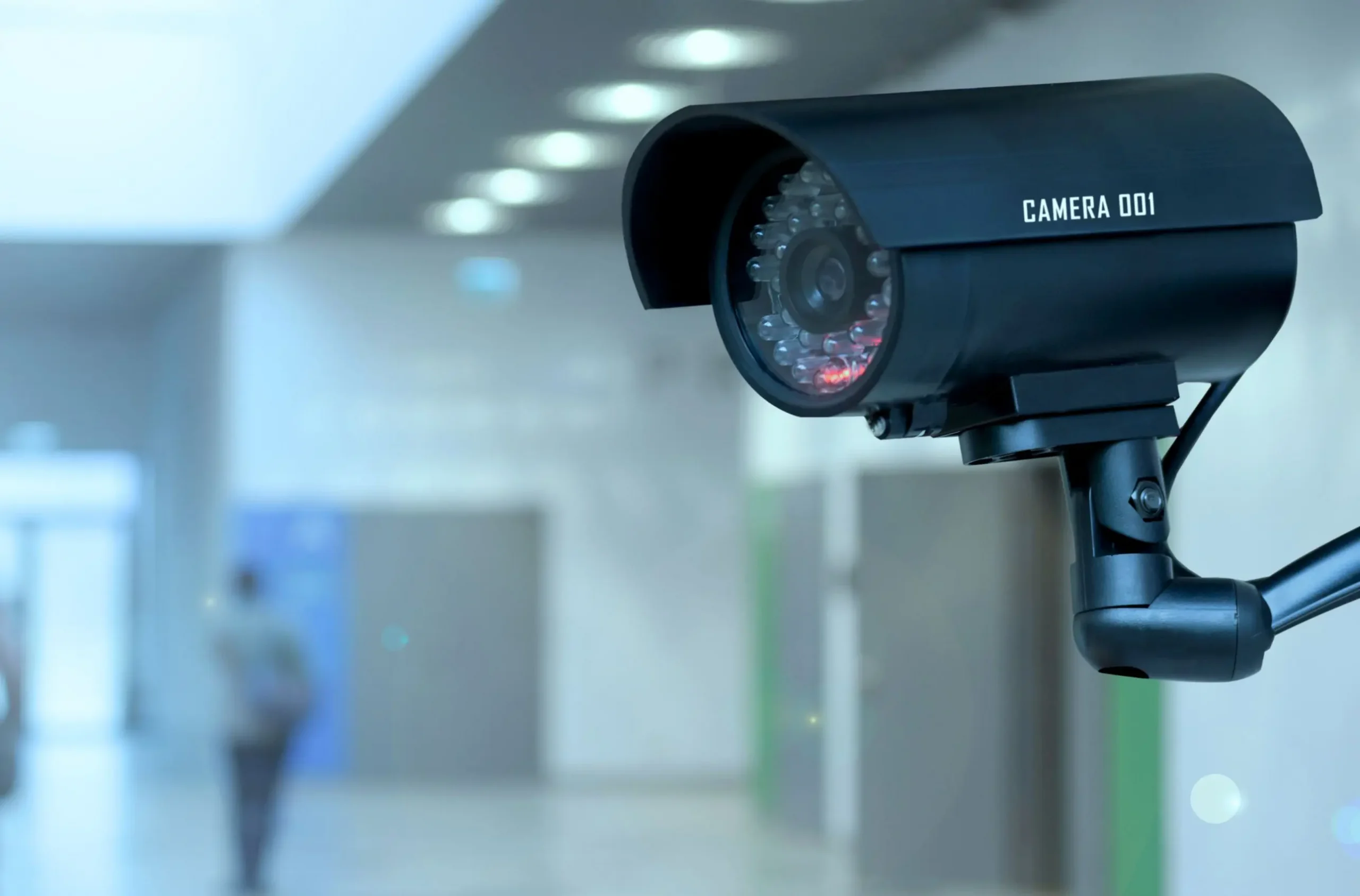
In today’s realities of business security, CCTV upgrade to VSaaS is not just a trend – it is a strategic necessity.
Over 64% of enterprises are shifting toward cloud-based surveillance models due to scalability, centralized storage, and analytics capabilities.
Large enterprises accounted for 65.74% of VSaaS market revenue in 2025, indicating strong enterprise demand.
Many B2B decision makers are still uncertain about the future of IT and therefore working with unclear standards. However, the technology itself is already far beyond their understanding. Concerns about hardware choices or fears about cloud security are issues that service providers need to address. They better serve it not as barriers to expanding their services, but as opportunities. So telecom providers can ensure that their business clients receive a real value added service – and in turn also benefit their own business.
Doubt of CCTV Upgrade to VSaaS: Why Replace an Existing Security Camera System If It Still Works?
The Common Question: “We already have our own CCTV system, why should we change?”
One of the major issues affecting B2B is the Sunk Cost Fallacy. With many having spent $1000’s over the years on NVR’s and cable, even though some of the systems are 5 years old they are not willing to see all their investment wasted. These customers consider a system to be working, as long as it is able to display an image on a screen.
Managing the Doubt of CCTV Upgrade to VSaaS: From Replacement to Enhancement
The key to selling a VSaaS system is to get the customer away from a replacement mindset and into an intelligence layering mindset. VSaaS is not about ripping out wires. Its about bringing a new level of brain power to the table.
- The key to their decision will be the value they place on their current CCTV system. We need to explain that VSaaS is not a replacement for cameras. It’s rather software solution that enhances the functionality of those cameras with advanced features. Such as remote viewing, video analytics (such as motion detection and object tracking), and offsite storage and redundancy.
- Practical advantage is in the switching to a cloud-based model. The risk of footage loss in the event of a hardware failure on a local terminal is excluded.
- The closing question: “How often do you currently have to manually download archives from your server, and how much time does that take your IT staff?”
Is Current CCTV System VSaaS-Ready? ONVIF and IP Camera Compatibility Explained
The Common Question: “Will the system work with our cameras?”
The hardest part is hardware compatibility. Historically business class systems have been very proprietary. So you had cameras from one brand only working with recorders from the same brand. And businesses are used to this model. They are worried about switching to a new service and having to “rip and replace” all of their hardware.
Managing the Doubt: Embracing Universal Standards
The VSaaS industry has moved very much into the realm of interoperability and virtually all professional-grade IP cameras. IP cameras are used on today’s video surveillance systems utilize the ONVIF and RTSP standard. So they can guarantee compatibility between systems from different manufacturers.
- The strategy is to educate the client as to the technical requirements of a system. Also to reassure the client as to the relative simplicity of the installation. If the client’s CCTV cameras are IP and ONVIF enabled, in the majority of cases, the system will be able to be switched on. Only maybe a software reconfiguration required or a small network bridge.
- The technical edge is highlight that modern VSaaS can often breathe new life into older cameras. All done by applying cloud-side AI (like facial recognition or object detection). The old system wasn’t capable of performing this level of analysis.
- The Closing Question: “Could you tell me the brand of the cameras you currently have installed? We can likely integrate them without any new hardware purchases.”
Why Managed Video Surveillance from ISP is the Smartest Choice?
The Common Question: “Why do we need CCTV from our internet provider?”
It seems there’s an enduring belief that ISPs should just focus on providing connectivity and stay out of the security business. Some of our customers look at security as a niche segment. That only pure play security companies can serve effectively. They can’t imagine that a large telecom company can possibly keep up with those specialists.
Managing the Doubt: The Power of Convergence
The strongest argument for an ISP-led VSaaS solution is accountability. By implementing VSaaS through an Internet Service Provider (ISP), the “connectivity gap” between a network connection and the video surveillance system can be eliminated. Without this gap, when a camera system goes down the accountability is clear-cut. If the ISP has connectivity issues, the security firm cannot claim responsibility. Likewise, if the security firm’s system is down, the ISP cannot claim fault.
- The main idea is to position the ISP as the “Single Point of Truth”. By handling the underlying bandwidth as well as the surveillance service itself, the ISP can guarantee Quality of Service (QoS). Also they can maintain priority of the video data to avoid breaches and compromises.
- The efficiency win is managing one contract, one invoice, and one support line. Significantly it reduces administrative overhead for the client’s IT department.
- The Closing Question: “How many different IT and security contractors are you currently managing, and how much time is lost in ‘finger-pointing’ when a technical issue arises?”
CCTV Upgrade to VSaaS: We don’t want to depend on a third-party Video surveillance service
The Common Question: “We don’t want to rely on a third-party service; we want full autonomy.”
B2B clients, particularly in sensitive sectors like manufacturing or finance, have a deep-seated fear of “dependency.” They worry that if the service provider has a glitch or if the internet goes down, their entire security perimeter will vanish.
Managing the Doubt: The Hybrid Architecture Solution
Using Hybrid Storage will always lead to greater autonomy. Optimizing the local storage in a VSaaS environment means not abandoning local storage. But using it in a way that complements the cloud.
- The strategy is to offer a “Best of Both Worlds” configuration. Critical, real-time data is stored on-site for zero-latency access, while long-term archives and emergency backups are mirrored to the cloud.
- The safety net is there in case the link to system is lost temporarily. It uses data recorded locally to “fill in the gaps” in the cloud when the connection is restored.
- The Closing Question:“Does a hybrid approach – where you keep local control but gain cloud redundancy – sound like a reasonable compromise to ensure 100% uptime?”
Is Cloud Video Storage Secure? How to Keep 100% Control of Your Surveillance Data
The Common Question: “We don’t like the idea of storing data in the cloud. Is it safe?”
They’re not alone in feeling skeptical of the cloud, and here’s why: most people don’t quite understand modern encryption methods. The term “the cloud” implies that that all your private videos are just floating around on the world wide web. Just waiting to be pulled up in a private browser window with the right password.
Managing the Doubt: Physical vs. Digital Risk Assessment
To manage this doubt, you must shift the risk profile. A physical server sitting in a back office is significantly more vulnerable than a telecom data center.
- This strategy is based on risk assessment. A local NVR can be easily stolen from over the door where it has been installed to watch would be burglars. It can also be ruined by fire or it can fall apart through the mechanism failure of a hard drive. The Telecom Cloud on the other hand offers at least end to end encryption. Along with redundancy for each of the various geographic storage servers.
- This compliance angle is intended to remind the customer that cloud providers have to follow more strict compliance rules than the average small business would be able to follow in their own datacenter.
- The Closing Question: “What exactly about cloud storage causes you the most concern? Is it data privacy, or is it the fear of losing access during an outage?”
Conclusion: Transforming Doubt into Digital Transformation
Busting VSaaS Doubts isn’t about winning or losing. It’s about demonstrating that a company’s assets are better protected while at the same time delivering lower expenses. By addressing concerns around hardware, technical compatibility as well as the numerous security questions in a detailed and fact-based manner, Telecom providers can successfully transform a worried customer into a paying client who generate long-term revenue and loyalty.
Don’t let uncertainty delay your next growth opportunity.
Współpracuj z Aipix to build a resilient, cost-effective VSaaS offering that your customers will trust and your business will profit from.



 PL
PL  EN
EN  ES
ES  FR
FR  PT
PT